



AI can now discover software vulnerabilities at unprecedented speed and scale. But between detecting a flaw and fixing it, applications remain exposed.
That window is where everything can be decided.
On April 7, 2026, Anthropic announced Project Glasswing and its Claude Mythos Preview model. The goal is clear: a model capable of reasoning about software architecture and autonomously identifying zero-day vulnerabilities, at a scale no human team can match.
The published results are hard to ignore. A 27-year-old vulnerability in OpenBSD, a 16-year-old bug in FFmpeg that had survived more than 5 million automated tests, zero-days identified in every major operating system and browser currently in production. And in more than 80% of cases, the model generates working exploit code entirely on its own.
As Elia Zaitsev, CTO of CrowdStrike, put it in his feedback on Project Glasswing: “The window between a vulnerability being discovered and being exploited by an adversary has collapsed. What once took months now happens in minutes with AI.”
This isn’t an isolated revolution. AI applied to security was already making progress in assisted fuzzing, static analysis and exploit generation. Claude Mythos represents a qualitative leap along that trajectory, not the emergence of a new category of risk.
Automated vulnerability discovery immediately raises an operational question: what do you do with these flaws once they’ve been identified?
Finding a vulnerability doesn’t fix it. It adds it to a backlog that teams don’t always have the means to absorb as fast as it fills up.
The patch cycle for a vulnerability in an operating system, a browser, a network device or an enterprise application takes weeks on average. Sometimes months for the most complex or oldest systems.
AI speeds up discovery, but it doesn’t speed up the patch cycle. It swells the volume of known, unpatched flaws, creating operational pressure that security teams are already struggling to absorb.
“This dynamic favors attackers in the short term, because cyber operations are fundamentally asymmetric. An attacker only needs one way in, while a defender has to secure the entire system.” Bloomsbury Intelligence and Security Institute
Enthusiasm for AI-driven automated vulnerability discovery must be tempered by an operational reality: AI can also generate false positives, sometimes in significant volumes. Every false alert to triage is time an engineer isn’t spending on a real risk, and it dilutes the real priorities.
Between the moment a vulnerability is identified and the moment the fix is actually deployed across all affected systems, there is a window. That window is precisely where attackers operate.
This isn’t a theoretical scenario. The publication of a CVE, even a partial one, is often enough to trigger a wave of exploitation attempts within hours. Malicious actors monitor vulnerability databases in real time, automate their scans and prioritize organizations whose patches haven’t yet been deployed.
The structural problem: the faster and more widely AI discovers flaws, the wider this collective exposure window becomes. Detection speed is increasing. Remediation speed, on the other hand, remains constrained by human and organizational factors that AI cannot solve on its own: validation, regression testing, deployment cycles, business dependencies.
The question, then, isn’t whether the flaws will be found. They will be, by defenders and attackers alike. The question is what protects applications while teams work on fixing them.
In the face of this acceleration, the answer can’t rely solely on the ability to patch faster. It must cover the window during which the fix hasn’t yet been deployed. That’s where two complementary capabilities come in: EASM and the WAF. They operate at two distinct levels of the defensive chain. One provides visibility into what is exposed. The other protects what is exposed. Together, they cover what the patch cycle alone cannot: the window between discovering a flaw and actually fixing it.
External Attack Surface Management consists of continuously mapping what an organization exposes to the internet, exactly as an attacker would during reconnaissance. Domains, subdomains, APIs, certificates, cloud services, assets forgotten during migrations: everything accessible from the outside is inventoried, monitored and updated in near real time.
At a time when attackers use AI to automatically scan external perimeters at scale, EASM ensures defenders have the same visibility into their own surface. Not during an annual audit. Continuously.
A modern WAF analyzes incoming traffic to web applications and APIs, detects exploitation attempts and blocks them before they reach the vulnerable code. It doesn’t fix the underlying flaw, but it neutralizes the attack vectors trying to exploit it.
This capability takes on a new dimension in the age of AI. When a model like Claude Mythos identifies a critical vulnerability and generates a working exploit, the WAF blocks the corresponding attack patterns well before the application patch is ready, tested and deployed.
New generations of WAF rely on behavioral analysis and machine learning to detect never-before-seen attack patterns, without depending solely on predefined rules. It’s this adaptability that makes the difference when exploits are generated automatically by AI.
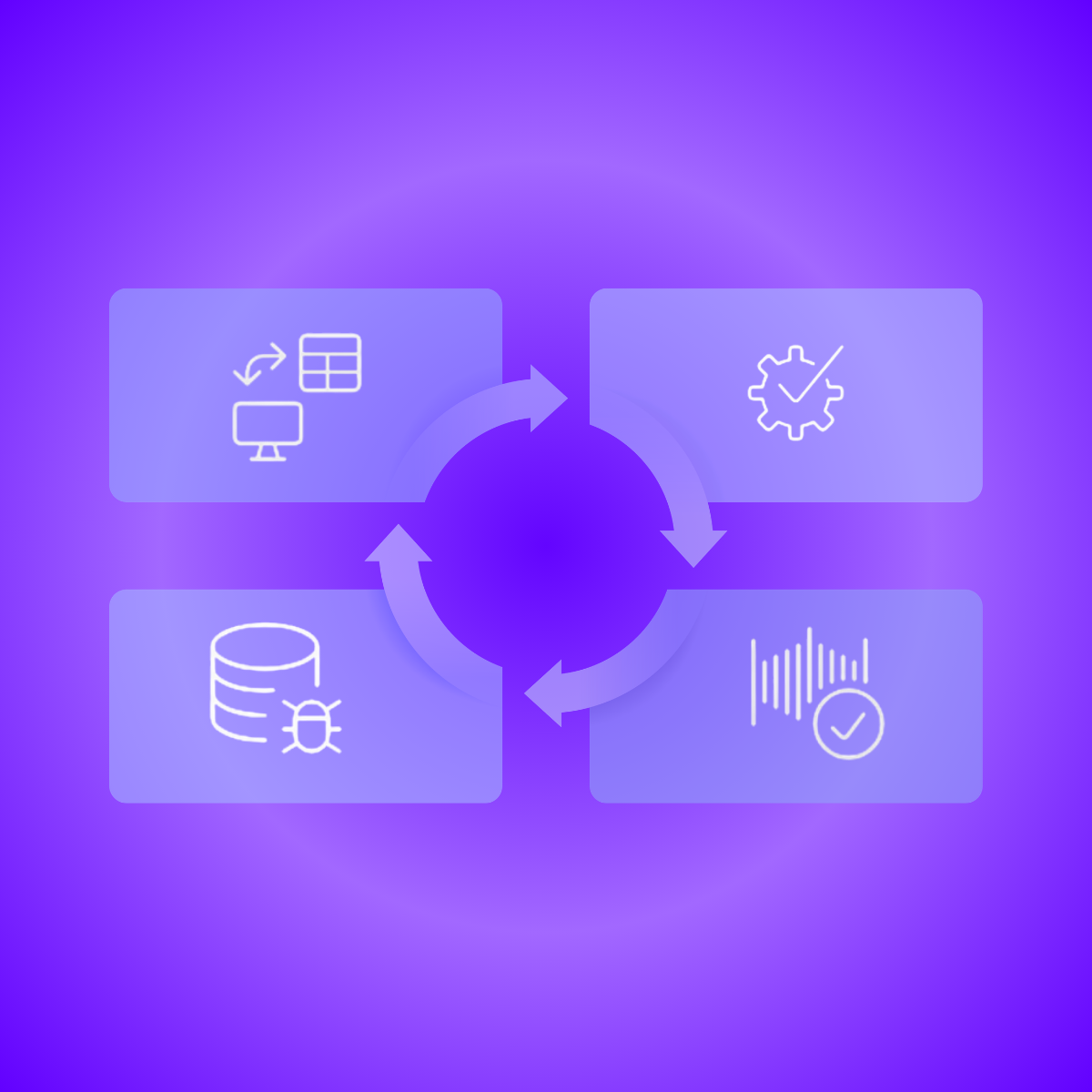
To illustrate how these two capabilities work together against today’s threats, here is the typical sequence of an incident in an environment equipped with both:
AI has changed the speed at which vulnerabilities can be discovered and exploited. It hasn’t changed the reality of patch cycles, which remain long, constrained and human.
The answer to this acceleration isn’t to patch faster. It’s to never leave a window open while you patch. EASM provides the visibility. The WAF provides the protection. Together, they close the window that AI has made more dangerous than ever.
Explore our guides and analysis on current threats.