How does Activ Security help with DORA?
The Activ Security solution effectively supports financial entities in achieving compliance with the DORA regulation, covering ICT risk management, resilience testing and third-party monitoring requirements. Thanks to its high level of automation, it becomes a strategic asset for CIOs and CISOs in the financial sector.

Resilience testing
Reporting and traceability
Risk management

Real-time protection
Vulnerability management
Third-party monitoring
What is the goal of DORA?
It applies to banks, insurers, asset managers, trading platforms, payment service providers and their critical IT providers.
ICT risk management requirements are set out in Articles 5 to 15.
Ensure digital operational resilience.
Organizations must assess the risks related to their web applications, taking into account their criticality and exposure
Manage and test ICT risks continuously.
Security incidents involving web applications & APIs must trigger immediate alerts to allow a rapid response
Oversee critical ICT third-party providers.
Web applications developed or hosted by third parties must be audited regularly to assess their resilience
Report major ICT incidents promptly.
Web applications must be scanned regularly to detect and fix vulnerabilities (for example Injection, Cross-Site Scripting, XXE, Sensitive Data Exposure)
How does Activ Security
address DORA?
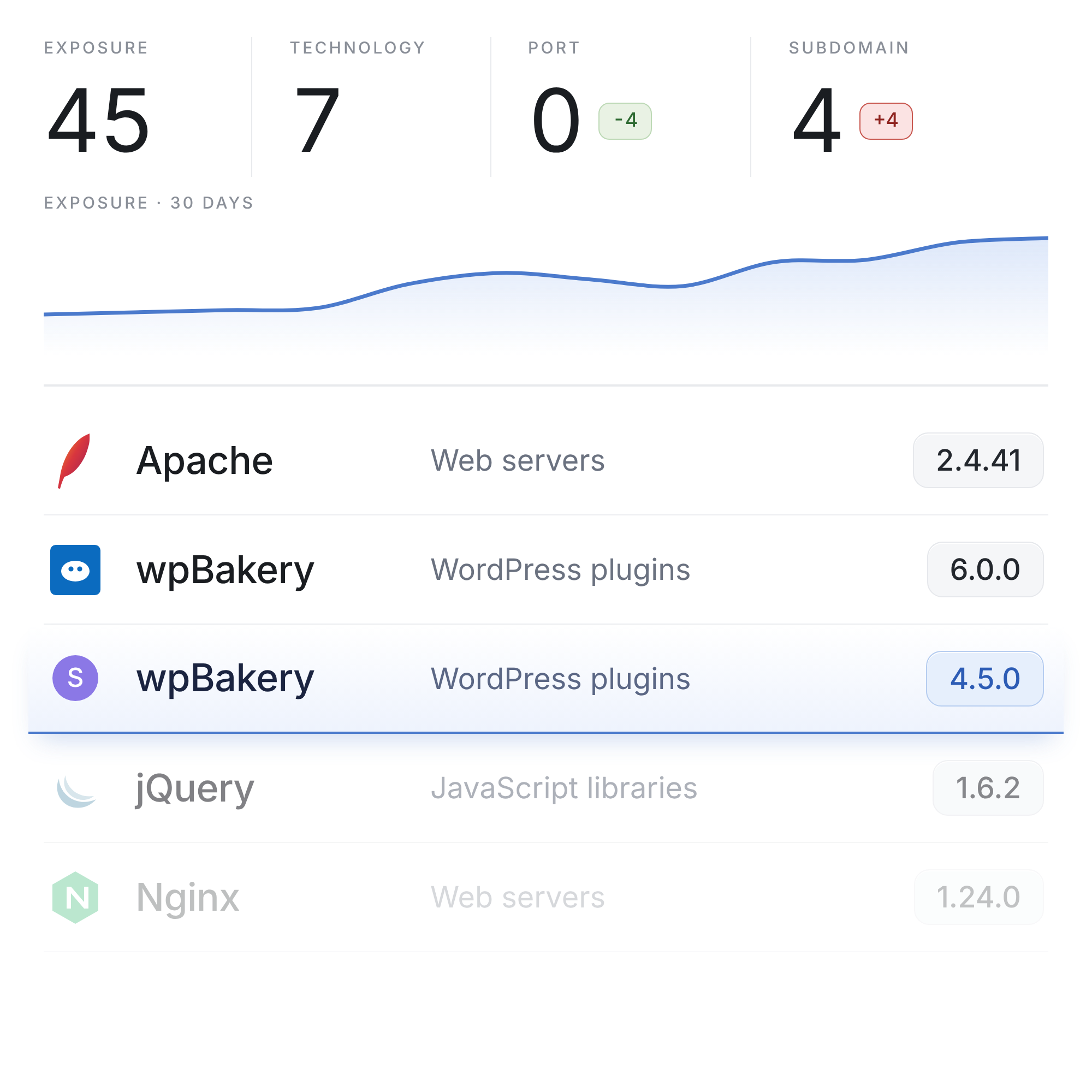
Simplified compliance.
By continuously monitoring exposed web applications, Activ Security enables security teams to document their level of digital operational resilience in real time and meet DORA requirements without administrative overload.

Art. 8
Any questions?
Find answers to the most common questions about cybersecurity and our solution.
Can’t find what you’re looking for? Our experts are available to answer your questions.
Which entities are subject to DORA?
DORA applies to the entire European financial sector: credit institutions, investment firms, payment institutions, insurance companies, asset managers, crypto-asset platforms, and their critical ICT third-party providers. More than 22,000 entities are affected across the EU.
What is the difference between DORA and NIS2 for the financial sector?
NIS2 is a general cybersecurity directive, whereas DORA is a sector-specific regulation for the financial sector, with stricter, directly applicable requirements. Financial entities subject to DORA are exempt from the NIS2 obligations covering the same scope.
How does Activ Security help prepare Threat-Led Penetration Tests (TLPT)?
Activ Security provides a precise, up-to-date map of your external attack surface, identifying exposed assets, their technologies and known vulnerabilities. This information is the foundation needed to define the scope and scenarios of a TLPT, in line with the requirements of DORA Article 26.
Does Activ Security generate the reports needed for DORA audits?
Yes. Activ Security automatically generates detailed PDF reports with scoring history, the list of detected vulnerabilities, corrective actions taken and trends over time. These documents are the evidence expected by auditors and regulators (ACPR, AMF, ECB).
How can I assess my third-party providers’ security with Activ Security?
Activ Security passively analyzes your providers’ internet-facing applications and services: simply enter their domains in the platform. With nothing to install on their side, you get an objective assessment of their security level, documenting the third-party monitoring process required by DORA.