



In recent years, we have seen a surge in French and European regulatory requirements, such as NIS2, DORA, and CaRE.
Organizations now face a dual challenge: protecting themselves effectively while being able to demonstrate compliance—that is, measuring, responding to, and tracking their security actions.
This is precisely where Activ Security stands out. The unique synergy between EASM and WAF engines embodies this approach: identifying vulnerabilities, blocking attacks, and documenting compliance, all within a single integrated platform.
Europe has taken a tougher stance. After several years of voluntary approaches and sector-specific standards, cybersecurity is now governed by regulations that impose measurable obligations of results. Organizations must no longer just implement protective measures, but demonstrate their effectiveness over time.
Three pillars now structure this regulatory transformation:
• NIS2 Directive (EU 2022/2555), which extends its scope to most critical sectors and digital service providers,
• DORA Regulation (EU 2022/2554), focused on the operational resilience of financial entities,
• French CaRE program , which organizes the implementation of an auditable cybersecurity strategy, particularly in the healthcare sector.
2. EASM & WAF: two complementary pillars
Cybersecurity is no longer limited to installing a web application firewall or running an occasional scan; it has become a continuous process. While EASM maps and detects vulnerabilities, the WAF protects and reacts in real time. Together, they form a cohesive ecosystem that directly supports the compliance objectives set by European frameworks such as NIS2, DORA, and CaRE.
EASM: understanding, mapping, and mastering your exposure surface
Before you can protect yourself, you need to know what is actually exposed.
This is the mission of EASM (External Attack Surface Management): to provide complete visibility into all assets connected to the internet, including domain names, subdomains, public IPs, APIs, certificates, open ports, and obsolete services.
This dynamic mapping acts as a permanent mirror of your digital footprint. It often sheds light on blind spots: forgotten test environments, unpatched administration interfaces, abandoned subdomains—all of which are entry points that attackers actively seek out.
WAF: Real-time protection and response
While EASM illuminates your attack surface, the WAF (Web Application Firewall) acts as its active shield. Positioned on the front line, it analyzes HTTP/HTTPS traffic and detects abnormal requests, including SQL injections, cross-site scripting (XSS), cross-site request forgery (CSRF), remote code execution (RCE), malicious bots, and application-layer DDoS attacks.
Unlike a traditional network firewall, the WAF operates at the application layer (Layer 7). Next-generation WAFs filter, learn, and adapt in real time. By leveraging behavioral analysis, they learn from traffic patterns, automatically adjust rules, and instantly block the exploitation of detected vulnerabilities.
An essential synergy: From risk detection to compliance proof
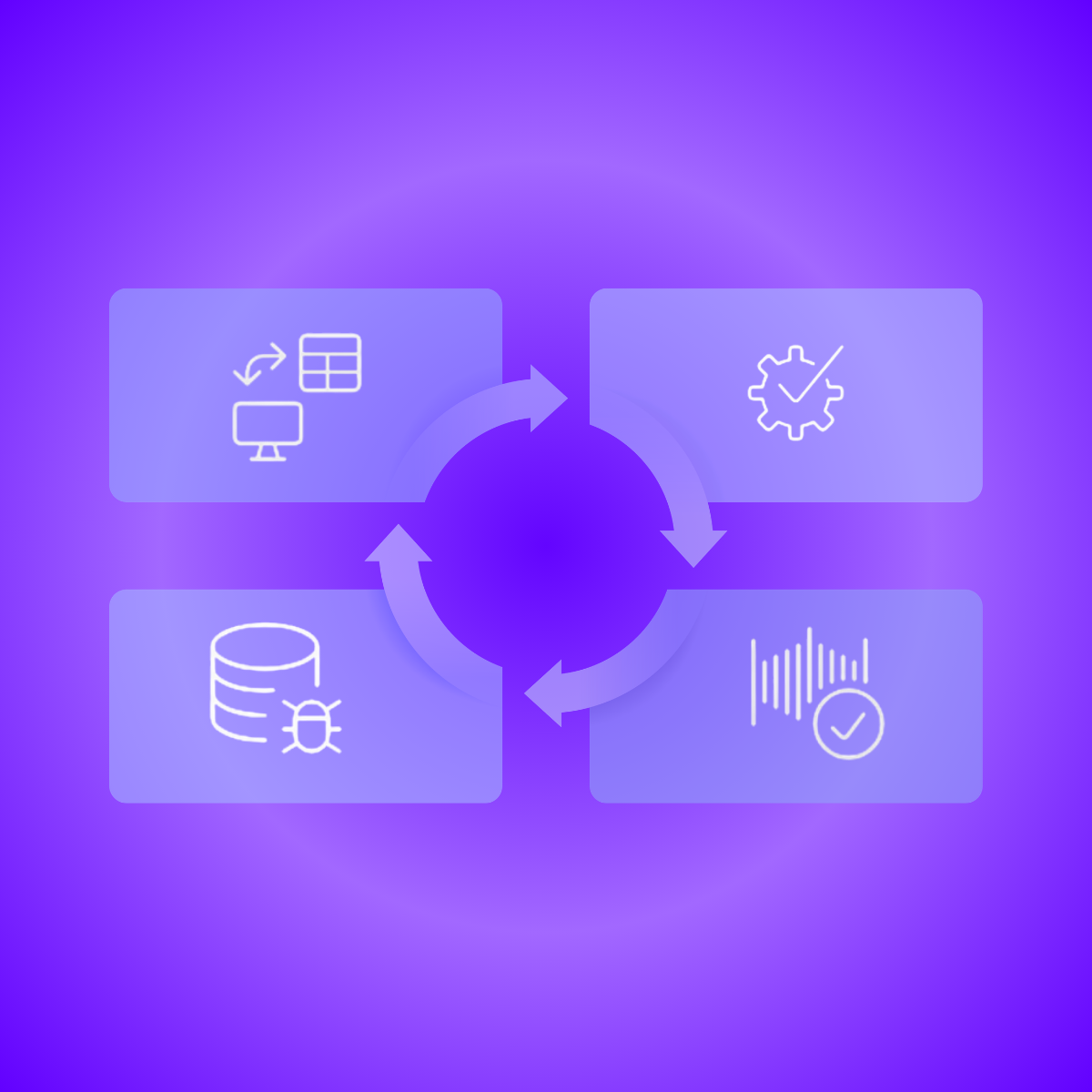
The true strength of Activ Security lies in the fusion of EASM and WAF, providing a continuous security loop:
Detection: EASM identifies a vulnerability or a risky configuration.
Protection: The WAF immediately applies a blocking or mitigation rule.
Documentation: The platform records, timestamps, and correlates these actions to generate proof of compliance.
This virtuous cycle perfectly aligns with the logic of the NIS2 and DORA frameworks, which require the ability to prove risk management and demonstrate the traceability of implemented technical measures.
NIS2 Directive (EU 2022/2555)
The Activ Security approach directly addresses the technical requirements outlined in Article 21 of the NIS2 directive:
• Article 21(a). Risk management policies: The platform provides scoring reports and a comprehensive map of the attack surface through its EASM module.
• Article 21(b). Incident management: Real-time alerts and detailed WAF logs ensure continuous monitoring of attack attempts.
• Article 21(e). Development and maintenance security: Dynamic OWASP Top-10 scans allow for the continuous assessment of web application and API security.
• Article 21(f). Assessment of the effectiveness of measures: Activ Security consolidates data from EASM and WAF to produce global reports demonstrating the effectiveness of security measures.
• Article 21(h). Cryptography and encryption: EASM integrates automated auditing of TLS/SSL protocols and certificates to identify weak or expired configurations.
• Articles 21(i) and 21(j). Access control and identity management: The WAF enforces filtering rules based on IP address, geolocation, or request signature, strengthening access control for exposed applications.
The collected evidence (reports, blocking history, remediation plans) provides actionable data for compliance audits.
DORA Regulation (EU 2022/2554)
The DORA regulation requires financial entities and their ICT service providers to adopt a rigorous approach to digital risk management. The combined features of Activ Security cover the following articles:
• Articles 5 to 7. ICT risk management: The EASM module continuously identifies and assesses critical assets exposed on the Internet, providing a clear view of the risks associated with the digital environment.
• Articles 9 and 10. Identification of critical ICT assets: EASM’s automated mapping makes it possible to locate essential services, their dependencies, and associated vulnerabilities.
• Articles 15 to 17. Incident management and reporting: The WAF logs attack attempts, generates real-time alerts, and maintains logs that can be used to meet incident reporting obligations.
• Articles 21 to 24. Digital resilience testing: EASM’s recurring and dynamic scans ensure regular assessment of application resilience against emerging threats.
• Articles 25 to 27. Management of third-party ICT providers: The visibility into hosted environments and external dependencies provided by EASM helps manage risks related to the digital supply chain.
French CaRE Program (Cyber Acceleration & Resilience of Institutions)
The CaRE program, led by the ANS and ANSSI, aims to strengthen the cybersecurity of healthcare institutions and critical operators. Activ Security covers the entirety of Domain 1: Internet Exposure, the technical core of the framework.
• Domains 1.1 to 1.6. External vulnerability inventory and analysis: the EASM module automatically discovers all exposed assets, analyzes their configuration, and identifies potential flaws to build a comprehensive view of the attack surface.
• Domains 1.7 to 1.9. Protection, logging, and application filtering: the Activ Security WAF provides real-time protection for web applications and APIs, blocks malicious requests, and maintains the logs required for CaRE audits.
• Domain 1.10. Assessment and recommendations: the consolidated EASM + WAF reports provide remediation recommendations and tracking indicators that are actionable during the technical audits required by the CaRE program.
Continuous, measurable, and auditable compliance
The European framework no longer just checks if an organization is compliant: it requires proof of continuous compliance. While a traditional audit offers a static snapshot of a security posture, the EASM + WAF combination provides a real-time film of operational compliance.
• EASM updates the map of exposed assets and the associated risk level daily,
• The WAF logs blocked attacks, abnormal behavior, and corrective measures applied,
• The platform correlates and archives this information to generate compliance indicators that are actionable during an audit.
A direct reduction in legal and operational risk
Non-compliance is no longer a theoretical risk; the penalties are severe. But beyond the financial impact, it is your reputation and business continuity that are at stake.
• NIS2 : up to €10 million or 2% of global annual turnover for essential entities,
• DORA : financial penalties, or even the withdrawal of authorization,
• Cyberscore / CaRE : administrative fines and loss of certification.
European cybersecurity compliance is no longer just about documentation; it now relies on technical and measurable proof of risk.
Explore our guides and analysis on current threats.