



Summer often means holidays, and therefore a time when vigilance can drop. As offices empty out and projects go on hold, cyber risks remain constant. During this period of reduced staffing, companies and public organizations need to redouble their efforts to protect their systems and data.
During the summer months, companies often face human challenges when it comes to cybersecurity. Team rotations, lighter on-call schedules and the absence of key contacts make security management harder. This temporary imbalance can lead to longer reaction times when an alert comes in, a loss of coordination between teams, and slower identification or remediation of critical flaws.
For example, a simple configuration error or oversight can become an entry point for an attack, often silent but potentially with serious consequences.
Attackers don’t take holidays. Data from CERTs (Computer Emergency Response Teams) and reports from agencies such as ANSSI or CISA show that attacks continue during quiet periods. Over the summer, for example, you’ll see automated scans looking for forgotten services, or compromise attempts via third parties who are also less vigilant.
A service put online without monitoring, an expired certificate or a poorly secured subdomain can be enough to compromise an entire infrastructure. Phishing attacks, for example, can specifically target the remaining employees, who are often swamped with work and therefore more likely to make mistakes.
Activ Security’s strength lies in its ability to maintain constant monitoring without requiring manual checks. Throughout the summer, the platform keeps analyzing your external exposure, detecting the slightest change. It maps your services visible online, detects newly exposed ports or applications, and alerts you immediately.
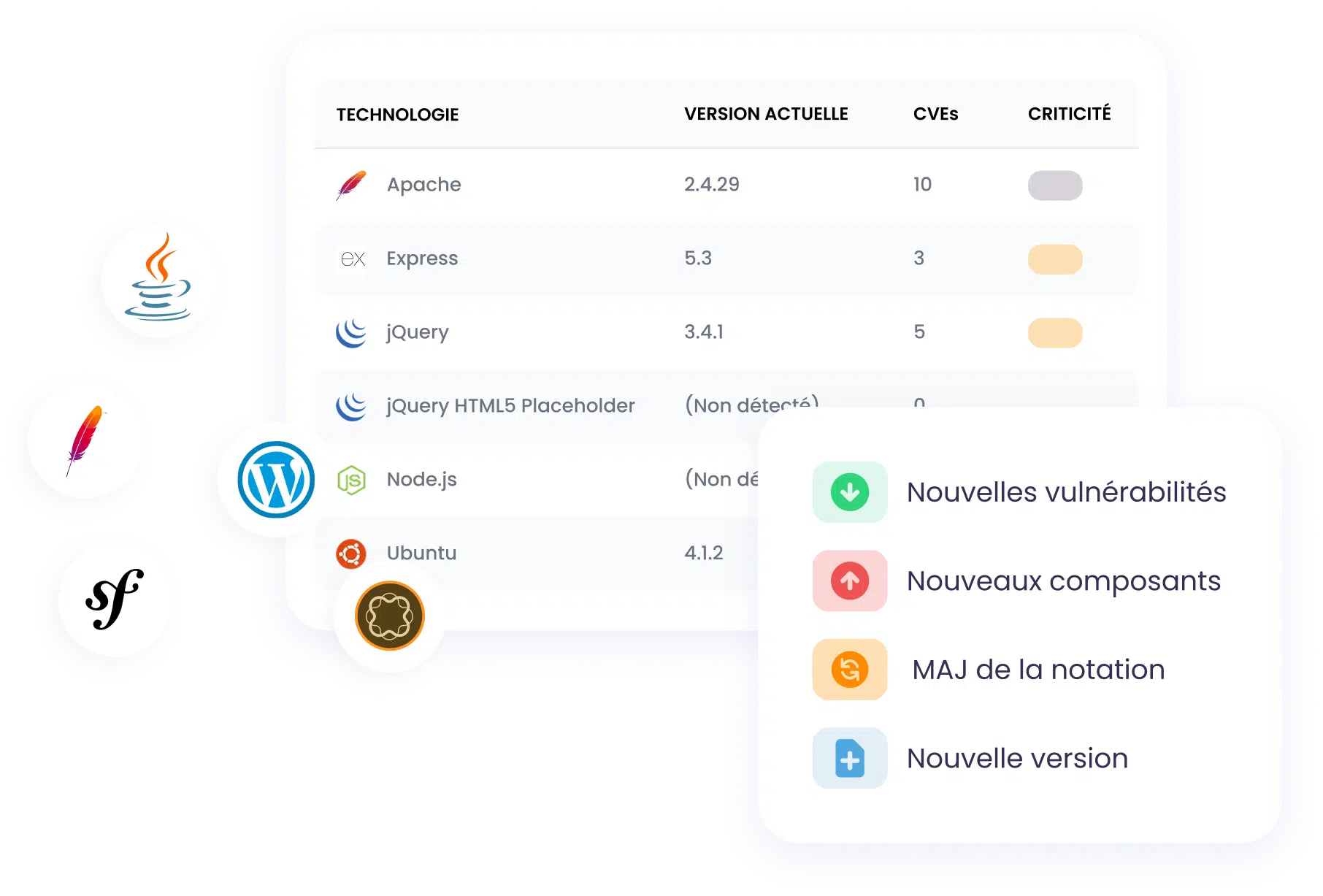
Imagine a scenario where an application used for internal development is updated without formal approval. Thanks to Activ Security’s continuous passive analysis, an alert is triggered as soon as a component becomes vulnerable. This early detection makes it possible to identify the fixes to apply immediately, preventing any potential exploitation by cybercriminals.
Good protection isn’t measured solely by the number of alerts, but by their relevance. Activ Security filters, ranks and sends useful information to the right people. The CISO (Chief Information Security Officer), even on holiday, can receive a critical alert directly on their phone, while on-call teams can keep following regular reports without being overwhelmed by non-priority notifications.
Alerts can also be sent to ticketing tools, SIEMs or SOCs.
Activ Security’s Web Application Firewall (WAF) works like an autonomous guard. It identifies and blocks exploitation attempts in real time, from SQL injections and XSS (Cross-Site Scripting) attacks to automated scans and application-layer DDoS (Distributed Denial of Service) attacks. Behavioral modeling, powered by built-in AI, detects deviant behavior even if it has never been seen before.
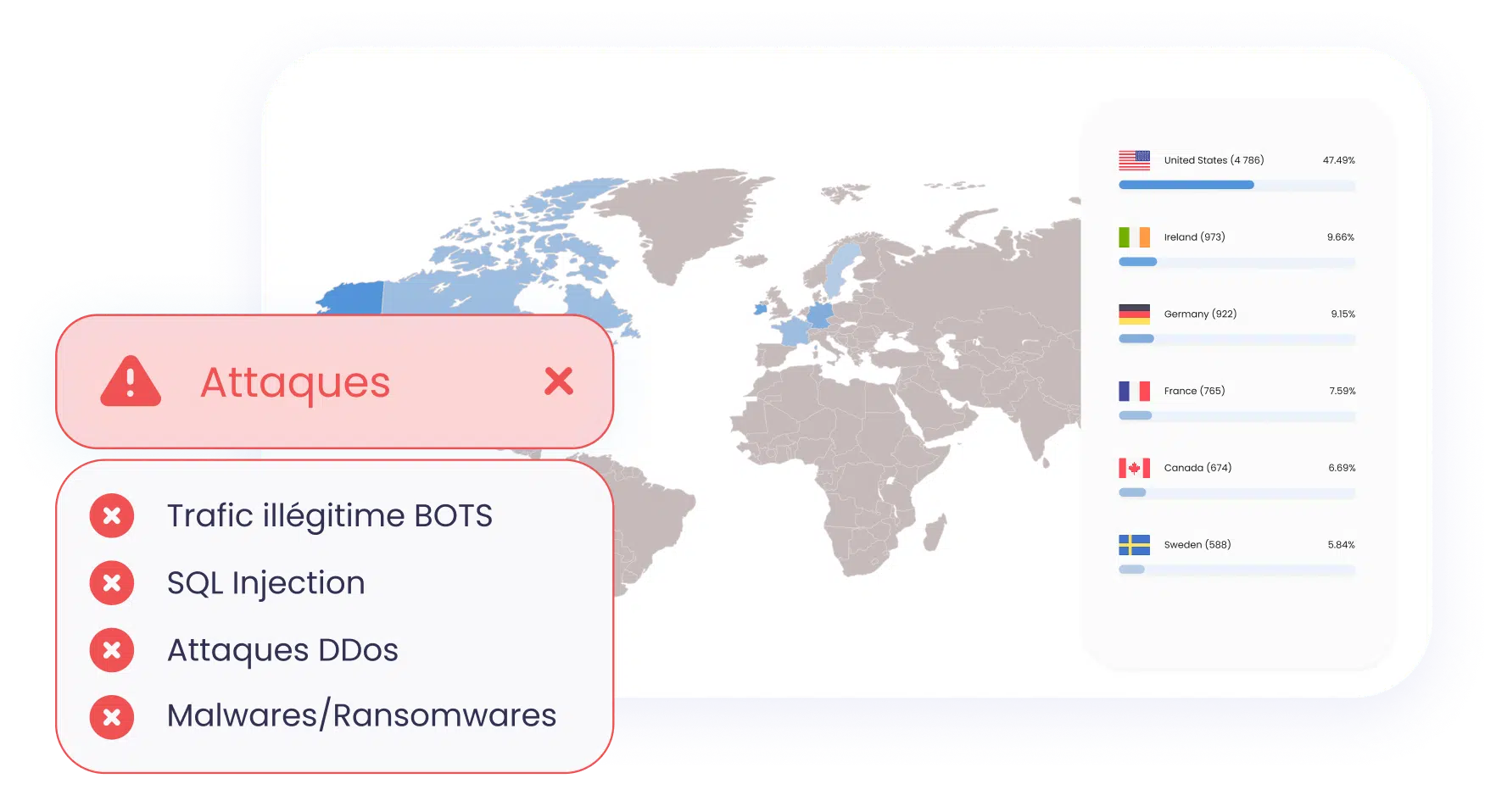
Suppose a cybercriminal tries to exploit an unknown vulnerability in a web application. Thanks to its behavioral analysis, Activ Security’s WAF can detect unusual attack patterns, such as repetitive requests or attempts to inject malicious code. Even if the exact signature of the attack is unknown, the WAF can block these attempts based on behavioral anomalies.
When the vendor has not yet released a patch, or the team in charge isn’t available to deploy it, the WAF can act as the first line of defense. It blocks requests exploiting known vulnerabilities, even if the patch hasn’t been applied. This is an essential safeguard against 0-day attacks, especially when response times are longer.
Imagine a critical flaw is published in August, while most of the security team is away. Activ Security’s WAF identifies the attack patterns linked to this vulnerability and applies specific blocking rules. The threat is neutralized before it has any impact, giving the company the time it needs to apply the appropriate patch once the teams are back.
In September, there’s no need to dive back into endless raw logs. With its summary reports and dashboards designed for decision-making, Activ Security gives you a clear view of the summer period: which threats were detected, which attacks were blocked, which vulnerabilities appeared… Everything you need to take back control of your security with peace of mind.
With the entry into force of directives such as NIS2 (Network and Information Security Directive), DORA (Digital Operational Resilience Act), Cyberscore and new sector-specific obligations, application security is becoming as much a regulatory issue as an operational one. Activ Security automatically documents your security actions, generates usable evidence for audits and supports you in gradually achieving compliance. A real time-saver for your teams, who can tackle these new constraints with confidence.
To illustrate, take the example of a mid-sized company in the financial sector. Last summer, while most of the IT team was on holiday, Activ Security detected and blocked several intrusion attempts targeting known vulnerabilities in their web applications.
Thanks to real-time alerts and reports, the on-call team was able to react quickly and apply the necessary fixes without disrupting operations. Back in September, the summary reports enabled the company to review its security posture and prepare for upcoming regulatory audits.
To head off with peace of mind, here is a non-exhaustive list of good habits for your online digital services:
1. Plan ahead: before summer starts, make sure all security updates have been applied and configurations have been properly checked
2. Raise your teams’ awareness: run training sessions on cybersecurity best practices, with a focus on the risks specific to the summer period
3. Check alerts and recipients: review the list of recipients (L1, L2, etc.) to ensure responsiveness
4. Put emergency procedures in place: make sure on-call teams know how to react to an alert and have access to the tools they need to handle incidents
5. Use automated solutions: platforms like Activ Security can greatly reduce workload and ensure continuous protection, even with reduced staff
If you too want to secure your web applications, our teams are available all summer long:
👀 Automated monitoring of your exposed surface
🔒 Active, continuous web protection
👥 Reduced operational workload
🤩 Better prepared for the back-to-work season
Have a great summer 🏝️
Explore our guides and analysis on current threats.