





Among cyberattacks, Slow POST attacks are particularly insidious. Unlike classic DDoS attacks, which flood a server with massive numbers of requests to take it offline, Slow POST attacks take a subtler approach. They use legitimate HTTP connections but send data extremely slowly, tying up server resources without generating abnormally high traffic.
This method is hard to detect and counter, and can cause a real denial of service (DoS) by blocking available connections while slipping past traditional defenses. But how exactly do these attacks work? Why are they so effective? And above all, how do you protect against them?
Slow POST attacks belong to the family of "low and slow" attacks, which aim to disrupt servers using very low-rate traffic. Unlike flood attacks, which overwhelm a server with requests until its resources run out, Slow POST attacks rely on a small volume of traffic designed to look normal to monitoring systems.
The technique exploits the way servers handle incoming connections. When a user sends an HTTP POST request to a server, they specify the size of the content to be sent in the Content-Length header. Normally, this data is sent all at once or over a short period.
In a Slow POST attack, the message body is sent extremely slowly. The goal is to tie up the server's connections, forcing it to keep many sessions open while it waits for the complete data. By opening a large number of these incomplete connections at the same time, the attacker can exhaust the server's resources, leaving it unable to handle legitimate users' requests and causing a denial of service.
This type of attack requires very little bandwidth from the attacker, yet has a disproportionate impact on the target server. Traffic from a Slow POST attack closely resembles normal user activity, which makes it hard for traditional volume-based monitoring systems to detect.
1. Initial connection: The attacker opens a connection to the target server and sends a complete HTTP POST header, including the Content-Length field indicating the size of the upcoming message body.
2. Sending data at an extremely low rate: Instead of sending the message body right away, the attacker sends it very slowly, for example one byte every two minutes.
3. Keeping the connection open: Following the protocol specification, the server keeps the connection open while it waits to receive all the data. Meanwhile, the resources tied to that connection stay in use.
4. Multiplying connections: The attacker repeats this process across many simultaneous connections, gradually exhausting the server's resources.
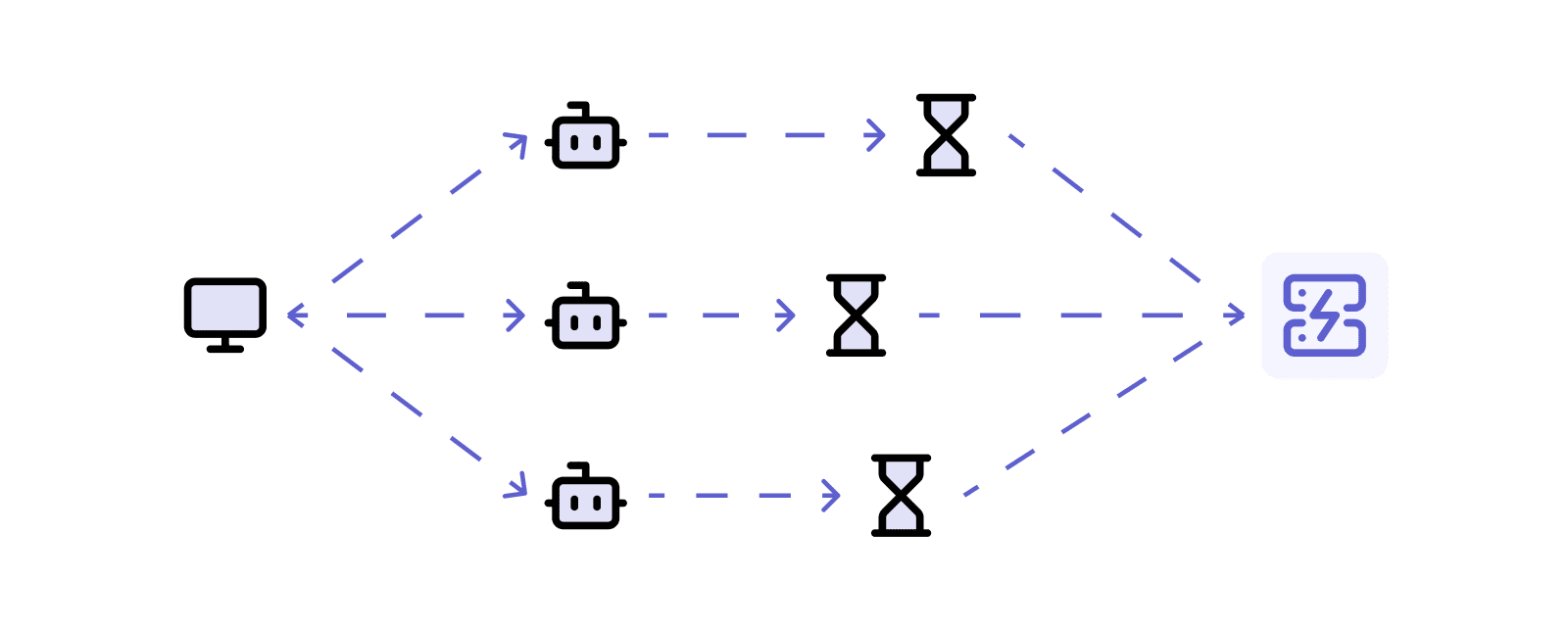
Because each connection is technically valid, the server doesn't close these sessions right away, which gradually saturates the available connections and locks out legitimate users.
Slow POST attacks stand out for their effectiveness, exploiting specific characteristics of web servers to cause denial of service. Several key factors make them effective:
1. Low resource consumption for the attacker: Unlike classic DDoS attacks, which need huge amounts of bandwidth and thousands of simultaneous requests, a Slow POST attack can be carried out with a single device and a standard internet connection.
2. Hard to detect: The traffic looks like that of a legitimate user on a slow connection. Detection systems based on traffic volume or request frequency struggle to spot the anomaly.
3. Gradual saturation of server resources: Web servers allocate resources to every open connection. When too many connections are stuck waiting, the server can no longer handle new requests, degrading performance and, in some cases, taking the service down completely.
4. Exploiting thread-based servers: Web infrastructures where each connection occupies a thread are particularly vulnerable. A Slow POST attack can quickly use up all available threads, blocking any new legitimate connection.
Together, these factors let Slow POST attacks take services offline quietly and effectively. So how do you detect and guard against this type of attack?
Detecting Slow POST attacks is particularly difficult because they're discreet and look like legitimate traffic. Several methods can help identify these threats:
An unusual increase in the number of open connections with little processing activity can indicate an attack in progress. Servers targeted by Slow POST attacks often show a large number of active connections but minimal CPU and network usage.
Comparing current traffic patterns with models of legitimate traffic helps identify anomalies. For example, a rise in POST requests with abnormally long transmission times can signal an attack. Machine learning algorithms can help distinguish malicious traffic from normal traffic by detecting unusual patterns.
Log analysis can reveal persistent connections with abnormally low data transfer rates. Log entries showing POST requests whose body takes an unusually long time to arrive, with no apparent reason, can be a sign of a Slow POST attack. Repeated connections of this kind from the same IP address or a specific address range strengthen the suspicion.
To strengthen protection against Slow POST attacks, Activ Security offers a web application firewall (WAF) based on contextual analysis that inspects incoming traffic in real time:
✅ Advanced analysis: the WAF and AI engine analyze HTTP/HTTPS requests in real time and block suspicious behavior without disrupting legitimate traffic.
✅ Dynamic security rules: adaptive thresholds to detect and limit abnormally slow HTTP POST connections.
✅ Proactive monitoring: continuous analysis of traffic patterns and anomaly detection to anticipate emerging threats.
The Activ Security platform provides in-depth protection against web attacks.
Explore our guides and analysis on current threats.