



Every week, cyber news is punctuated by the continuous discovery of new vulnerabilities. In this context, it is essential for companies to take a proactive approach to risk management.
That is exactly the goal of CTEM, an approach presented by Gartner as a strategic pillar for strengthening your security posture.
CTEM (Continuous Threat Exposure Management) is a modern approach to cybersecurity that focuses on the continuous identification, assessment and mitigation of potential threats. This iterative, continuous and risk-driven process aims to permanently assess an organization’s exposure to threats. It’s no longer about testing your system once a year, but about moving at the same pace as attackers.
Unlike traditional threat management approaches, which often focus on one-off assessments, CTEM takes a more dynamic, real-time approach.
It combines threat intelligence, situational awareness and automated response capabilities, allowing organizations to respond to new threats more effectively and quickly.
In short, CTEM continuously assesses what is exposed, what is vulnerable and what is actually exploitable:
The main goal of CTEM is to improve the resilience and security of IT systems.
CTEM makes it possible to quickly identify new threats and emerging vulnerabilities, while continuously assessing threat exposure to prioritize remediation actions according to risk level.
CTEM aims to spot new threats and emerging vulnerabilities in near real time, before attackers exploit them. This allows organizations to take preventive measures to reduce risk.
CTEM continuously assesses the threat exposure of IT systems, taking into account changes in the threat and vulnerability landscape. This lets organizations prioritize their security efforts according to risk level.
By taking a continuous approach to threat management, CTEM enables organizations to respond quickly to threats and security incidents. This shortens the lag between detecting a threat and responding to it.
CTEM helps organizations make better use of their security resources by focusing on the threats that are most critical and most likely to cause damage. This allows resources to be allocated effectively where they are needed most.
The pace of cyberattacks doesn’t slow down, especially during holiday periods. Periods of lower vigilance are often actively exploited by attackers.
Implementing a CTEM strategy is a dynamic approach to cybersecurity that allows you to:
By 2026, organizations prioritizing their security investments based on a continuous exposure management program will be three times less likely to suffer a breach.
Source: Gartner
Identify your organization’s critical assets, such as IT systems, sensitive data and essential applications. Then assess the potential threats that could affect these assets, taking into account known vulnerabilities and cyber threat trends.
Based on the initial assessment, draw up a detailed action plan to mitigate the risks identified. This plan should include specific measures to strengthen the security of critical assets, such as applying security patches, configuring firewalls and raising employee security awareness.
Implement the security measures identified in the action plan, making sure they are integrated across your entire IT infrastructure. This may involve configuring security software, putting security policies in place and training staff on security best practices.
Put monitoring tools in place to track your organization’s threat exposure in real time. This can include monitoring activity logs, analyzing vulnerabilities and detecting network traffic anomalies. Make sure you set up alerts to flag suspicious activity or potential security events.
Carry out regular security assessments to evaluate the effectiveness of your security measures and identify newly emerging risks. Review and update your action plan based on new information and changes in the threat landscape.
Adopt a continuous improvement approach by drawing on lessons learned from past security incidents and making iterative improvements to your CTEM strategy.
The Activ Security platform fully supports the five pillars of a CTEM strategy as defined by Gartner: scoping, discovery, prioritization, validation and mobilization.
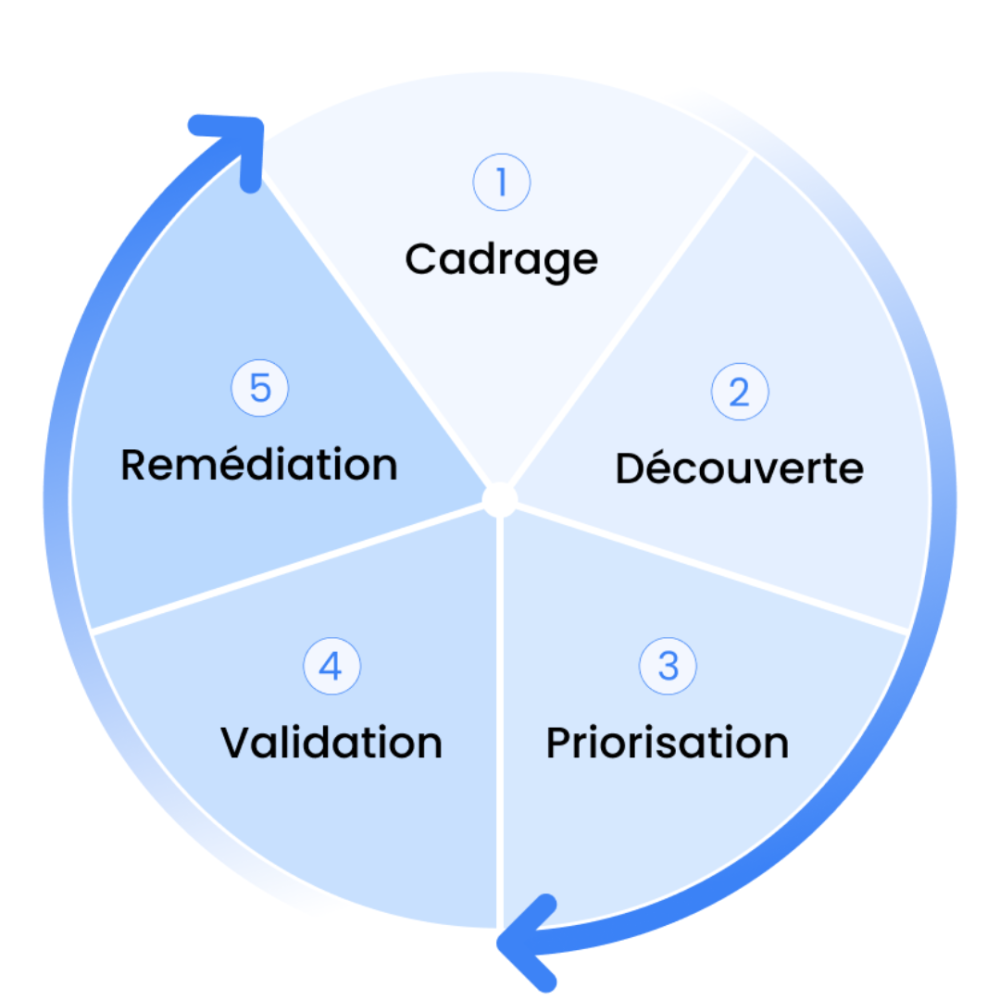
Once this identification is done, you need to determine which people inside or outside the company have access to these attack surfaces.
Activ Security provides real-time monitoring tools that let organizations detect the elements they expose on the internet:
The Activ Security engine continuously assesses threat exposure by identifying the vulnerabilities and weaknesses that can be exploited: application surface, CVEs, CWEs, certificates, ports, misconfigurations, OWASP Top 10. The platform lets you prioritize actions according to business criticality, real exposure level and the probability of active exploitation (KEV, EPSS, etc.).
Activ Security uses passive and dynamic analysis techniques to detect and assess weaknesses. Thanks to its dynamic analysis (DAST), Activ Security validates the presence of flaws in real conditions, without interrupting service. The goal is to identify flaws that are actually exploitable (not just theoretical), which makes remediation priorities more relevant.
The platform automatically pushes vulnerabilities into ticketing or incident management tools, and supports teams in implementing fixes, especially during periods when security teams are less available.
Activ Security integrates easily with other security solutions and threat management tools. The platform gives you a consistent overview of your security posture and helps you coordinate your defense efforts effectively.
During holiday periods or times of high mobility, continuous monitoring allows you to:
👉 The CTEM approach is now a concrete response to the growing density of new risks. Activ Security offers a platform that combines visibility, responsiveness and automation, in support of a sustainable CTEM strategy, even in summer.
Explore our guides and analysis on current threats.